
Ingredient glossary
Silica
On your shelf ✓What Silica does for your skin, who it suits, and what to watch for.
INCI: Silica · Also: Silicon dioxide
In short: Silica delivers oil absorption and mattifying, suits combination and oily skin best, and the evidence behind it is moderate.
- What it does
- Oil absorption, mattifying
- Best for
- Combination, Oily skin
- Evidence
- Moderate
What it actually is
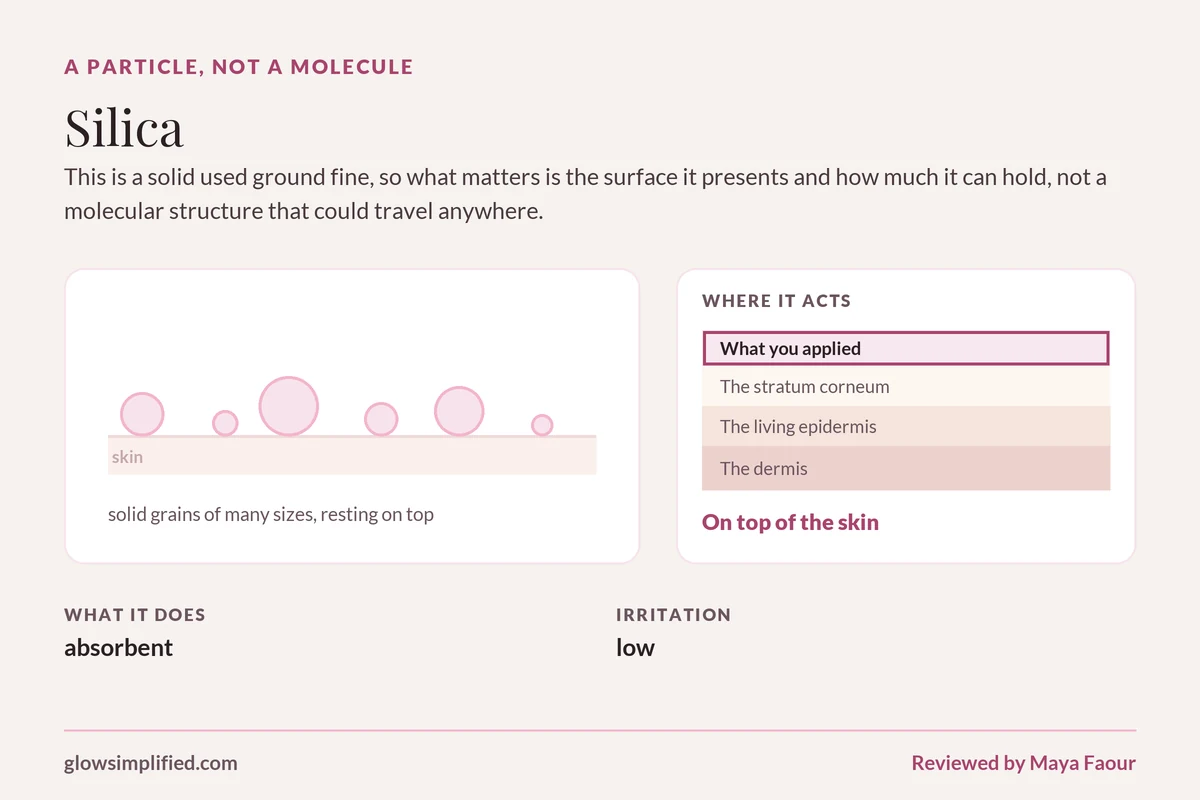
The Glow take
Nice to have, and nothing to overthink.
Silica plays a quiet supporting role, rounding out a formula rather than being the reason you buy it.
— Maya
What it does
- oil absorption
- mattifying
- texture
moderate evidenceReviews note that non nano synthetic amorphous silica has a long history of safe use as an inert absorbent in cosmetics. SCCS opinions remain inconclusive for specific nano forms because of data gaps in dermal absorption.
Who it's for, and who should skip it
Tends to suit
- oily
- combo
- acne prone
- photoaged
Approach with care
- very sensitive
- eczema
- Clogs poresLow
- Irritation riskLow
How it fits each skin type
- DryNeutral
- CombinationSuits
- OilySuits
- SensitiveTake care
Often chosen for acne prone, photoaged. Take extra care if any of these apply to you: eczema.
Where it fits in your routine
Silica, answered
Is Silica safe during pregnancy?
Yes. Silica is considered safe to use during pregnancy and breastfeeding. As with anything, if you are unsure it is worth a quick word with your doctor or midwife.
Who should avoid Silica?
Approach Silica with care if any of these apply to you: very sensitive and eczema.
What concentration of Silica actually works?
Its concentration is rarely printed on the label, so use the ingredient list as your clue: near the top third it is likely doing real work, near the bottom it is more of a sprinkle.
This, for every label you own
One ingredient is easy. A full label is where it gets confusing. The Ingredient Decoder reads any product and tells you the honest truth, ingredient by ingredient.