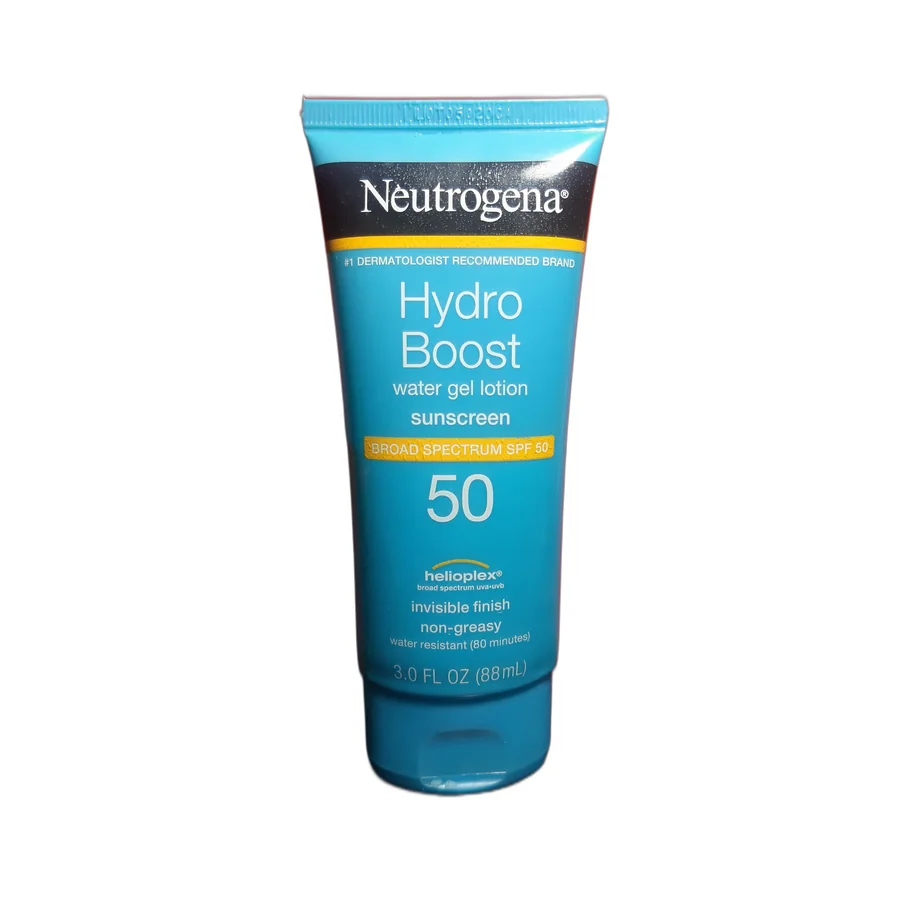
Beauty of Joseon Relief Sun: Rice + Probiotics SPF50+ On your shelf ✓
Our read, in one look
Tinosorb M is the reason to consider this sunscreen, with Niacinamide behind it.
The case for it
- Tinosorb M, strong evidence for lines and firmness
- Niacinamide, strong evidence for the barrier
- No fragrance, alcohol or parabens
Mind this
- A morning step, under sunscreen
- Add it on its own for a week or two, so you know what your skin is answering to
 Maya's read
Beauty of Joseon Relief Sun: Rice + Probiotics SPF50+ is a sunscreen built around Tinosorb M, Niacinamide and Glycerin. It leans strongest on hydration, barrier repair, brightening / tone. Best suited to oily, combo and dry skin. Nothing in it we'd flag for most people.
Skip it if you need water resistance for swimming or sport: check the label for that first.
The formula, drawn
Every ingredient in label order, coloured by the job it does here.
21 of the 42 sit above the 1% line. The other 21, hatched, are each under 1%. Widths show the ORDER on the label and nothing else: the label never discloses amounts, so we never draw them.
- Actives & signals
- Hydrators
- Texture & base
- Preservation
- Not in our library yet
- No fragrance anywhere on the label
What it delivers
How it feels Finish varies by batch and region, so check matte-vs-dewy before committing if that matters to you. (estimated from the formula)
What's in it that matters
Broad spectrum microfine UV filter that provides strong UVB and UVA protection with high photostability and minimal penetration making it ideal for modern sunscreens.
Multitasking vitamin that improves barrier, reduces redness, regulates oil, helps with pores and pigmentation with strong clinical support.
Classic humectant with strong evidence for improving skin hydration and supporting barrier when combined with emollients.
Plant-derived ester emollient that mimics the lightweight, silky feel of volatile silicones with good compatibility for sensitive and acne-prone skin.
Signal nucleoside that modestly improves periorbital and facial wrinkles and elasticity in Korean cosmetic studies with good tolerability.
Fat-soluble antioxidant that protects oils from oxidation and can support photoprotection; may be comedogenic or irritating for some.
How to use it
The last step of your morning routine, over moisturiser. Reapply through the day if you are outdoors.
Where it acts
The same cross-section as our 500 dalton page, with this formula's actives on the layer each one works on. Depth is the anatomy's, never an ingredient's.
Skin surface
On top of the skin
- Tinosorb Mderived from what it is
The stratum corneum
- Coco-Caprylate/Capratederived from what it is
- Glycerinderived from what it is
- Vitamin Ederived from what it is
The living epidermis
- Niacinamideestablished, sourced
5 of this product's actives have a layer we can defend. 1 did not, so it is not on the diagram: no source and no honest derivation means no dot.
Sources for the sourced ones: Boo 2021: mechanistic basis for topical nicotinamide; Ebanks et al. 2009: mechanisms regulating skin pigmentation.
The full ingredients list, decoded
Every ingredient on the label, in the order it appears (highest amount first). We link the 17 our library knows, name what each one does, and flag anything that can irritate or clog. The rest we leave plain, nothing is hidden.
All 42 ingredients, decoded
- AquaSolvent (base)
- Dibutyl Adipate
- PropanediolHumectant
- Polymethylsilsesquioxane
- Ethylhexyl Triazone
- NiacinamideVitaminmild irritant
- Coco-Caprylate/CaprateEmollient
- Caprylyl MethiconeSilicone (slip)
- Diethylhexyl Butamido Triazone
- GlycerinHumectant
- 1,2-HexanediolPreservative booster
- Butylene GlycolHumectant
- Pentylene GlycolHumectant
- Behenyl AlcoholEmollient (fatty alcohol)
- Poly C10-30 Alkyl AcrylateThickener
- Polyglyceryl-3 Methylglucose DistearateEmulsifier
- Decyl GlucosideSurfactant
- Oryza Sativa ExtractBotanical extract
- TromethaminepH buffer
- roughly the 1% lineThe rules only require descending order above 1%. From Carbomer down, these 21 can be listed in any order the brand likes, so position stops telling you anything.
- CarbomerThickener
- Acrylates/C10-30 Alkyl Acrylate CrosspolymerThickener
- Sodium Stearoyl GlutamateEmulsifier
- Polyacrylate Crosspolymer-6Thickener
- EthylhexylglycerinPreservative booster
- AdenosineNucleoside
- Xanthan GumThickener
- T-Butyl Alcohol
- TocopherolAntioxidantmild irritant
- Oryza Sativa Germ ExtractBotanical extract
- Camellia Sinensis Leaf ExtractAntioxidantmild irritant
- Aspergillus FermentBotanical extract
- Bacillus/Soybean Ferment ExtractBotanical extract
- Cocos Nucifera Fruit ExtractBotanical extract
- Lactobacillus/Pumpkin Ferment ExtractBotanical extract
- Lactobacillus/Rice FermentBotanical extract
- Macrocystis Pyrifera ExtractBotanical extract
- Monascus/Rice Ferment FiltrateBotanical extract
- Panax Ginseng Root ExtractAntioxidant
- Saccharomyces/Rice Ferment FiltrateBotanical extract
- Saccharum Officinarum ExtractBotanical extract
Worth knowing: Adenosine sits below that line. It is in there, and the label does not tell you how much. That is not the same as saying it is too little to matter.
Copy the raw INCI list
Aqua, Dibutyl Adipate, Propanediol, Diethylamino Hydroxybenzoyl Hexyl Benzoate, Polymethylsilsesquioxane, Ethylhexyl Triazone, Methylene Bis-Benzotriazolyl Tetramethylbutylphenol (Nano), Niacinamide, Coco-Caprylate/Caprate, Caprylyl Methicone, Diethylhexyl Butamido Triazone, Glycerin, 1,2-Hexanediol, Butylene Glycol, Pentylene Glycol, Behenyl Alcohol, Poly C10-30 Alkyl Acrylate, Polyglyceryl-3 Methylglucose Distearate, Decyl Glucoside, Oryza Sativa Extract, Tromethamine, Carbomer, Acrylates/C10-30 Alkyl Acrylate Crosspolymer, Sodium Stearoyl Glutamate, Polyacrylate Crosspolymer-6, Ethylhexylglycerin, Adenosine, Xanthan Gum, T-Butyl Alcohol, Tocopherol, Oryza Sativa Germ Extract, Camellia Sinensis Leaf Extract, Aspergillus Ferment, Bacillus/Soybean Ferment Extract, Cocos Nucifera Fruit Extract, Lactobacillus/Pumpkin Ferment Extract, Lactobacillus/Rice Ferment, Macrocystis Pyrifera Extract, Monascus/Rice Ferment Filtrate, Panax Ginseng Root Extract, Saccharomyces/Rice Ferment Filtrate, Saccharum Officinarum Extract
Read enough? Find it on amazon.com →
We don't make or sell skincare of our own. So there's nothing here we're trying to push, just an honest read of whether this formula suits your skin.
Against your shelf
Read from your own shelf, in your browser. We never see it.
Compare it with…
Common questions
Is Beauty of Joseon Relief Sun: Rice + Probiotics SPF50+ good for oily skin?
By our read of the formula, it suits oily, combo, dry skin. Beauty of Joseon Relief Sun: Rice + Probiotics SPF50+ is a sunscreen built around Tinosorb M, Niacinamide and Glycerin. It leans strongest on hydration, barrier repair, brightening / tone. Best suited to oily, combo and dry skin. Nothing in it we'd flag for most people.
How do you use Beauty of Joseon Relief Sun: Rice + Probiotics SPF50+?
The last step of your morning routine, over moisturiser. Reapply through the day if you are outdoors.
What are the key ingredients in Beauty of Joseon Relief Sun: Rice + Probiotics SPF50+?
The actives that do the work are Tinosorb M, Niacinamide, Glycerin, Coco-Caprylate/Caprate, Adenosine, Vitamin E. The rest of the list is texture, preservatives and emulsifiers that hold the formula together.
Does Beauty of Joseon Relief Sun: Rice + Probiotics SPF50+ contain fragrance?
No. By our reading of the ingredient list it is fragrance-free, which is a plus for sensitive or reactive skin.
What the 3D scene shows
The scene shows Beauty of Joseon Relief Sun: Rice + Probiotics SPF50+ beside a cross-section of skin, with 4 of its ingredients drawn at the layer each one acts on and at one shared molecular scale: Glycerin and Tinosorb M and Vitamin E in the stratum corneum, the dead outer layer where most skincare works; Niacinamide in the living epidermis, among the cells that are still dividing. Depths come from the same sourced layer data as the rest of this site, and any ingredient whose layer is not established is left out rather than guessed.