
Ingredient glossary
Caprylic/Capric Triglyceride
On your shelf ✓What Caprylic/Capric Triglyceride does for your skin, who it suits, and what to watch for.
INCI: Caprylic/Capric Triglyceride
In short: Caprylic/Capric Triglyceride delivers softening, suits most skin types, and the evidence behind it is strong.
- What it does
- Softening
- Best for
- Most skin types
- Evidence
- Strong
- How long
- Straight away
What it actually is
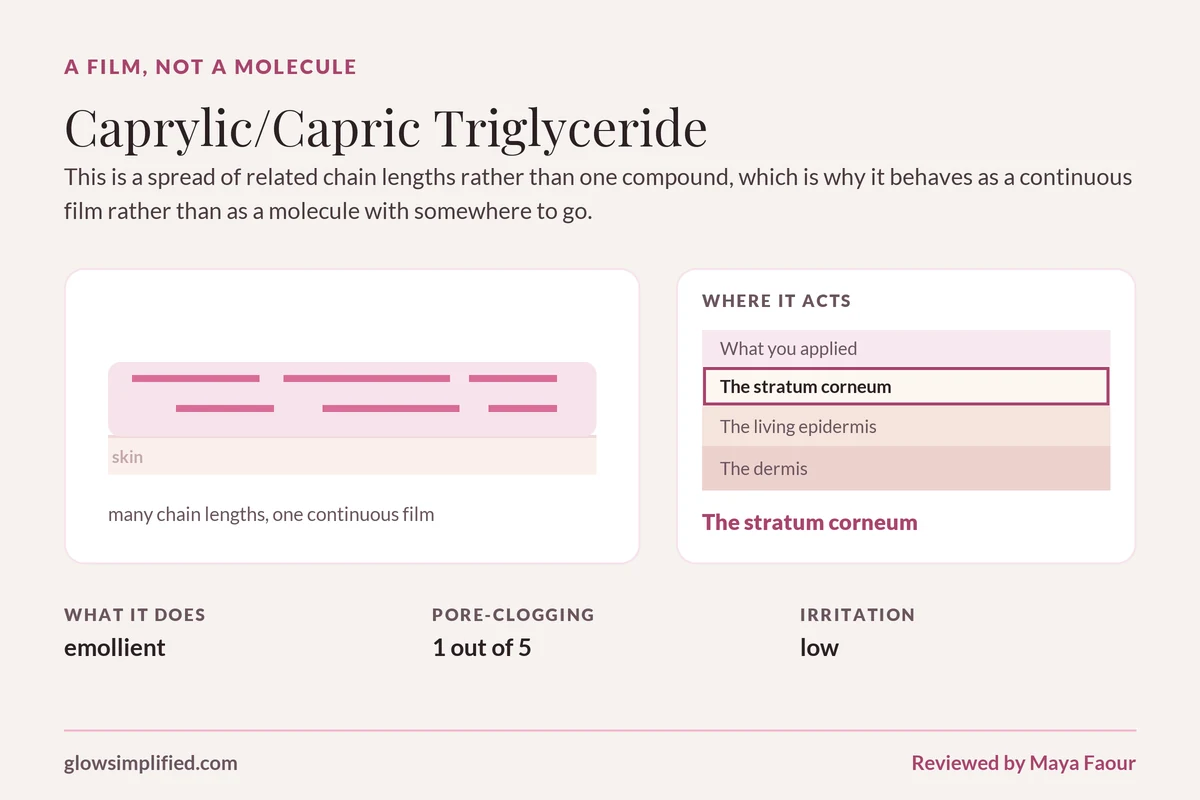
The Glow take
A comfort ingredient, and none the worse for it.
Caprylic/Capric Triglyceride is here for feel and moisture, softening the skin and slowing water loss. More comfort than correction.
— Maya
What it does
- softening
strong evidenceSupported by cosmetic chemistry literature for its assigned function, with fewer direct clinical outcome studies than hero actives.
Who it's for, and who should skip it
Tends to suit
- all
Approach with care
- fungal acne prone
- Irritation riskLow
How it fits each skin type
- DrySuits
- CombinationSuits
- OilySuits
- SensitiveSuits
Take extra care if any of these apply to you: fungal acne prone.
Where it fits in your routine
This one works on contact — there is nothing to wait for.
What that covers, and what it does not
Measured on: slip and surface softness from the applied ester film, with a small reduction in evaporative water loss.
A medium-chain triglyceride ester is a spreading emollient: the film is on the skin the moment it is applied, and there is nothing being remodelled to wait for. The base scores it barrier_support 3, consistent with a light film rather than an occlusive. No human trial times its effect, and none is needed for the immediate bucket -- but equally, no multi-week claim can be supported for it.
No timing study identified. Emollient ester film, documented in formulation literature only.
Plays well with
- humectants
- occlusives
Caprylic/Capric Triglyceride, answered
Is Caprylic/Capric Triglyceride safe during pregnancy?
Yes. Caprylic/Capric Triglyceride is considered safe to use during pregnancy and breastfeeding. As with anything, if you are unsure it is worth a quick word with your doctor or midwife.
Who should avoid Caprylic/Capric Triglyceride?
Approach Caprylic/Capric Triglyceride with care if any of these apply to you: fungal acne prone.
What concentration of Caprylic/Capric Triglyceride actually works?
Its concentration is rarely printed on the label, so use the ingredient list as your clue: near the top third it is likely doing real work, near the bottom it is more of a sprinkle.
Does it clog pores?
A light, fractionated-coconut emollient that rates low.
- This rating comes from old lab tests on the isolated ingredient, not the finished product.
- The full formula, how much is used, and your own skin all matter more than one number.
- If you are acne-prone it is worth noticing, not a reason to avoid it on sight.
Checking a whole product? Paste its list into the pore-clogging checker →
This, for every label you own
One ingredient is easy. A full label is where it gets confusing. The Ingredient Decoder reads any product and tells you the honest truth, ingredient by ingredient.